Showing posts with label yeast. Show all posts

Sunday, February 27, 2011

Yeast hunting: 1st taste

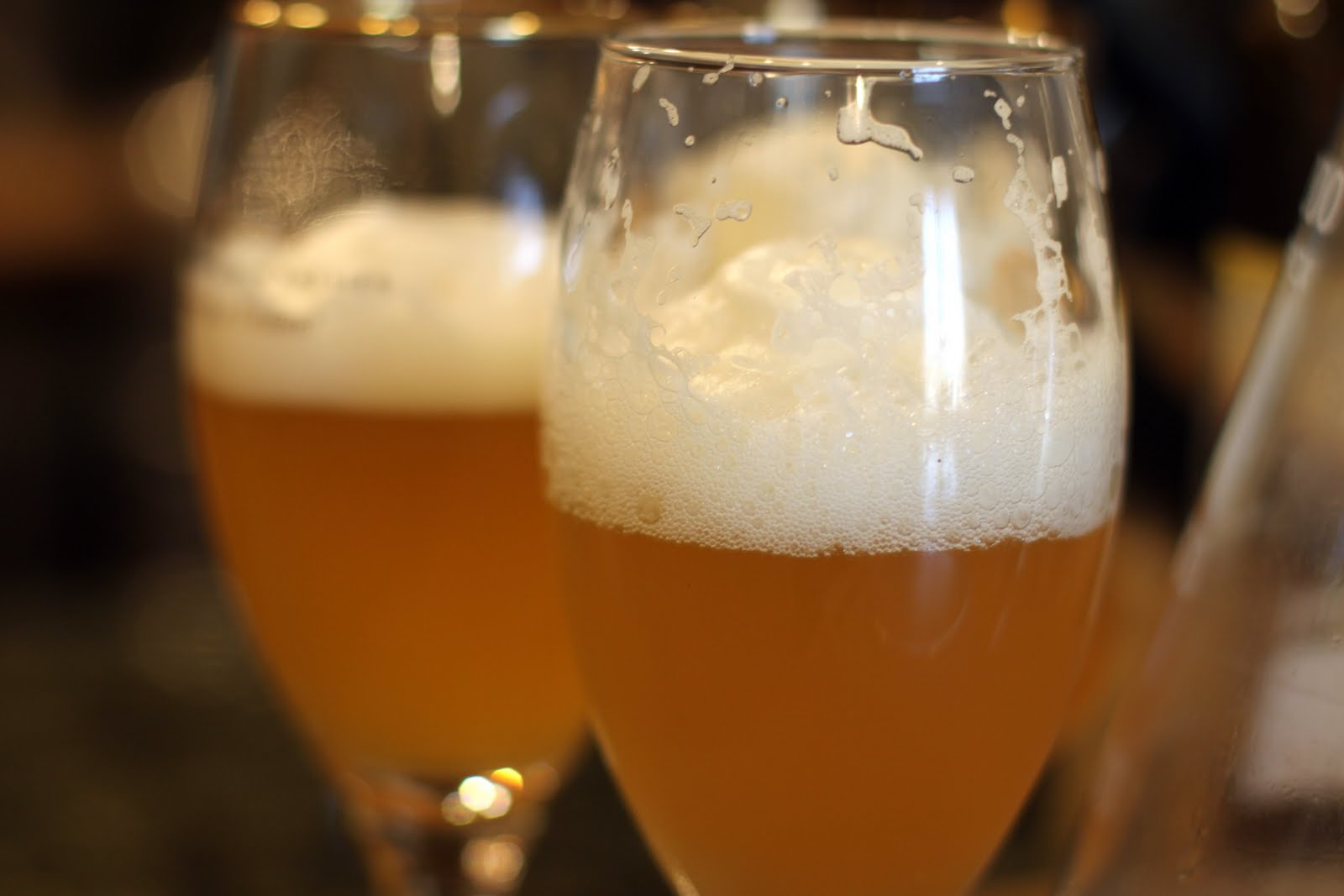
Luc was asleep, and without the necessary specificity, I suggested in a hesitant but casual tone, 'Hey, you guys want to try some beers?'. The usual affirmatives shot around the room, so I pulled out the bottles that I had been pretty leery about trying. Yes, the first tasting of beers fermented with wild bugs collected in Connecticut.
Esther, Jason, Brendan and I huddled around some ominous looking fliptops and a smattering of BJCP scoresheets. The group was ready to try the latest from Trillium...and then I had to break the news "These are probably going to be the worst beers you've ever had in your life."

them: "Is this going to make me sick...or worse?"
me: "Uh, no...nothing 'bad' can live in beer. Uh...I think."

I thought it best if I just excerpted some notes from the session:

"Astringent. Raw wort. Really bad."

"Gross."

"Unfermented wort."

"Hairspray, celery."

"I don't want to try any more of these."

"Faint Muskiness. Acetone."

"Really gross."

"Even worse."

"Aquanet. Celery...in a really bad way"

"Malty molasses, unfermented...grosser."

Now I really didn't have much in the way of hope to hit it out of the park w/ my first collection of wild yeast, given it was likely still too early in the yeast collection season, and I likely way underpitched. I did think that I would get some alcohol tolerant strains, given the action in the sample vials. The near still 'beer' and raw sugars that were still present told me otherwise.

Now, the base beer wasn't brewed with a lot of effort or the best ingredients...I really had intended the first batch to be a propagation step, with which I would pitch on to their respective yeast cakes. OG of 1.040 w/ old liquid dark malt extract taking up space in our fridge for the last 3 (4?) years, a 30 minute boil and some old low alpha hops (to ~10IBUs). So, I forewarned...gave the expectation that it would be a pretty bad beer, not only for this reason, but mostly for the fact that that microbes used to ferment them were a total crapshoot.

Here's the very bright bit of sun peeking through the clouds ...these were all notes from the last 3 of the 4 bottles, but here are some selected notes from the tasting team from first bottle (the yeast sample collected from the Chardonnay grapes):

"Fruity, faint wood astringency...just a touch bright"

"Crystal clear, rusty red"

"Slight roast, lactic (maybe just the faintest whiff of acetic)"

"Weak flanders red"

"Dry, thin, well carbonated. A bit of barnyard, but overall very clean. Alcohol?"

"Clean snap finish. Dry."

"Weak, but sessionable. No hop flavor."

"Slight astringency, tartness, fruity...but needs more of everything."

"Weak to start and finish, but really great potential. Needs more character."

"Slight sour lingers on the tongue, bright, clean finish."

"Auburn, crystal clear. Thick beautiful head, falls slowly to a 1 inch persistent head."

"Potential to be a 'new england red'"


So, while the first bottle set up the expectations that were unreachable for the rest, I was surprised to find that even one of these samples yielded an even moderately alcohol tolerant strain of sacchromyces (too clean to be brett, I think).

Yeast from the dregs were saved and are intended for a more earnestly brewed beer.

Any microbiologists out there want to help me to isolate various yeast and bacteria strains?

jc (at) trilliumbrewing (dot) com

Monday, November 15, 2010

Double barley wine, orval'd

During the spike of irrational exuberance that commonly plagues homebrewers with a few solid batches under their belt, about 3 years ago, I decided I wanted to shoot the moon...brew up a ~20%abv double barley wine bomb that could age for years, decades even.

There were a good number of commercial examples that I've read about, sampled a handful. How hard could it be?

Brewing beers before certainly sported loads of enthusiasm. Perhaps lacked a bit of perspective. It had come quite easily. Even the russian imperial stout recipe flagged with the 'expert' connotation in the homebrew magazine seemed to be an easily attained success. Time to up the ante. Way up.

So, I got greedy. I'll google and google and google until my little fingers could google no more, and I'll simply read up on all the brew forums how I could bang out a beer that would push the very limits of yeasty fortitude.

I'll step over the bodies of those that have tried and failed before me (what exactly is a stalled fermentation, anyway? never happened to me before, they must be skipping obvious steps), and ride the apparent attenuation coattails to success.

Should be easy enough.

Trappist high gravity yeast? Yeah, that's the ticket.

40% simple sugars to boost the fermentability of the wort. how extreme! But...why use one, when four different sugars would undoubtedly add a 'depth of flavor'?

Daily aeration? Hmmm, where's that aquarium pump...got it!

No way I can mash enough grain for a 5 gallon batch in my little mash tun, so I'll partial mash this beast, make up the different with extract. I'll split off the batch to give the Cali ale yeast a good start at a reasonable OG, and then really concentrate down the rest of the volume, late addition with the sugars with a FOUR HOUR BOIL. (are you rolling your eyes at me yet?)

Can the concentrated wort and do daily additions...it'll be better (and easier) than dissolving little baggies of reconstituted cane sugar every day for 2 weeks, I'm sure of it.

All that concentrated wort should bring the combined gravity to ~1.170. Yeah, that's what i said. 1.170. Well...no, I didn't measure it. I calculated with my whiz-bang Beersmith software.

Right, I can't be sure, as I didn't think to do a 50% dilution of the final concentrated wort, to be within the range of my hydrometer). Whatever.

A well timed addition of high gravity yeast, made in a high gravity starter w/ some of the canned wort (y'know, you have to acclimate the yeast to what its about to face, right?) will drive that attenuation to my target of 1.025.

OK, maybe I'd be happy with 1.030. It'll need that balancing sweetness to handle that huge alcohol, yes?

6 lbs Amber Liquid Extract (12.5 SRM) Extract 23.35 %
8 lbs Pilsner (2 Row) Bel (2.0 SRM) Grain 31.13 %
1 lbs Cara-Pils/Dextrine (2.0 SRM) Grain 3.89 %
12.0 oz Caramel/Crystal Malt - 80L (80.0 SRM) Grain 2.92 %
3.2 oz Chocolate Malt (450.0 SRM) Grain 0.78 %
1.00 oz Columbus (Tomahawk) [12.20 %] (240 min) Hops 31.0 IBU
1.00 oz Glacier [6.00 %] (240 min) Hops 15.3 IBU
2.00 oz Palisade [6.90 %] (240 min) Hops 35.1 IBU
1.00 oz Cascade [5.50 %] (15 min) Hops 6.3 IBU
1.00 oz Palisade [6.90 %] (15 min) Hops 7.9 IBU
1.00 oz Glacier [6.00 %] (15 min) Hops 6.9 IBU
2.00 oz Oak Chips (Secondary 14.0 days) Misc
4 lbs Cane (Beet) Sugar (0.0 SRM) Sugar 15.56 %
2 lbs 12.0 oz Maple Syrup (35.0 SRM) Sugar 10.70 %
2 lbs Honey (1.0 SRM) Sugar 7.78 %
1 lbs Molasses (80.0 SRM) Sugar 3.89 %

6 months later, that hydrometer wasn't budging.

~1.065
*Hydrometer pictures Oct 2010 (not 1998)

This beer quickly eroded my mounting homebrewing hubris down several notches. But, I couldn't drink it, I couldn't hand over a bottle to a friend (or foe) with a straight face, and couldn't bear to chuck it. Maybe my friend Mike could force carb it, and that would give it the impression of it being dried out with a carb bite to it? Ah, no, tastes like carbonated barley wine cough syrup.

Text that night from mike as he racked it over:

"The gravity is 1.065...want to ferment this a little more first"

Ouch.

So, in this keg, the big beer that couldn't, slumbered for a few years in a basement. He moved to a new house. Hung out down there for a few months, too.

texts, each a loud echo the last, would show up periodically:

"hey, want that barley wine of yours"

Oct. 15, 2010...I took delivery of that embarrassing keg, humbled but hopeful.

The reclamation plan I had already set in motion was eerily similar to the underattenuated quad solution.

Use bugs. Lots of 'em.
Plus a liberal dose of hope.

Start small, though.
Build vigor with time.

Dregs from 2 relatively fresh bottles of Orval.
500 ml 1.040, 1 week, decanted,
1000ml, 1.040 2 weeks, decanted.
2 gallons, 1.038 5 days decanted ~75% (will need some active brett going in, knowing the chances of anything waking up in the super toxic environment, even brett, was slim. Knowing any lacto or pedio in there probably would crash and burn in the cough syrup of a beer, I pinned all my hopes on the fortitude of brett brux var. orval)

Boy, it really hurt racking over from the keg, as the head formation in the 7.9 gallon bucket was downright glorious. Not to mention all the wonderful aromatics hitching a carbonated ride, liberated from the beer.

Yet another learning experience. But, embarassment, shame has given way. I now cherish these 'teachable moments'. I feel thankful for these relatively harmless miscues. There's always next time, the next beer that will be better for it.

I've been slowly, surely accumulating them over the years in my personal bizarro world book of 'how NOT to brew'.

I should have slow bled off pressure over the course of several days, then racked.
Ok, you wild and crazy Belgians...have at this car wreck of a wicked big beer.

Happy to report that after 1.5 months after Orval'ing the wicked big beer, I still have positive pressure on the S-shaped airlock, and a bit of funk emanating from under the plastic. Who knows, maybe I'll realize my dreams of reaching ~1.025 one day, even if it comes a few years later than planned.

Ok, I'd be happy with 1.030.

Wednesday, October 20, 2010

Yeast hunting: update

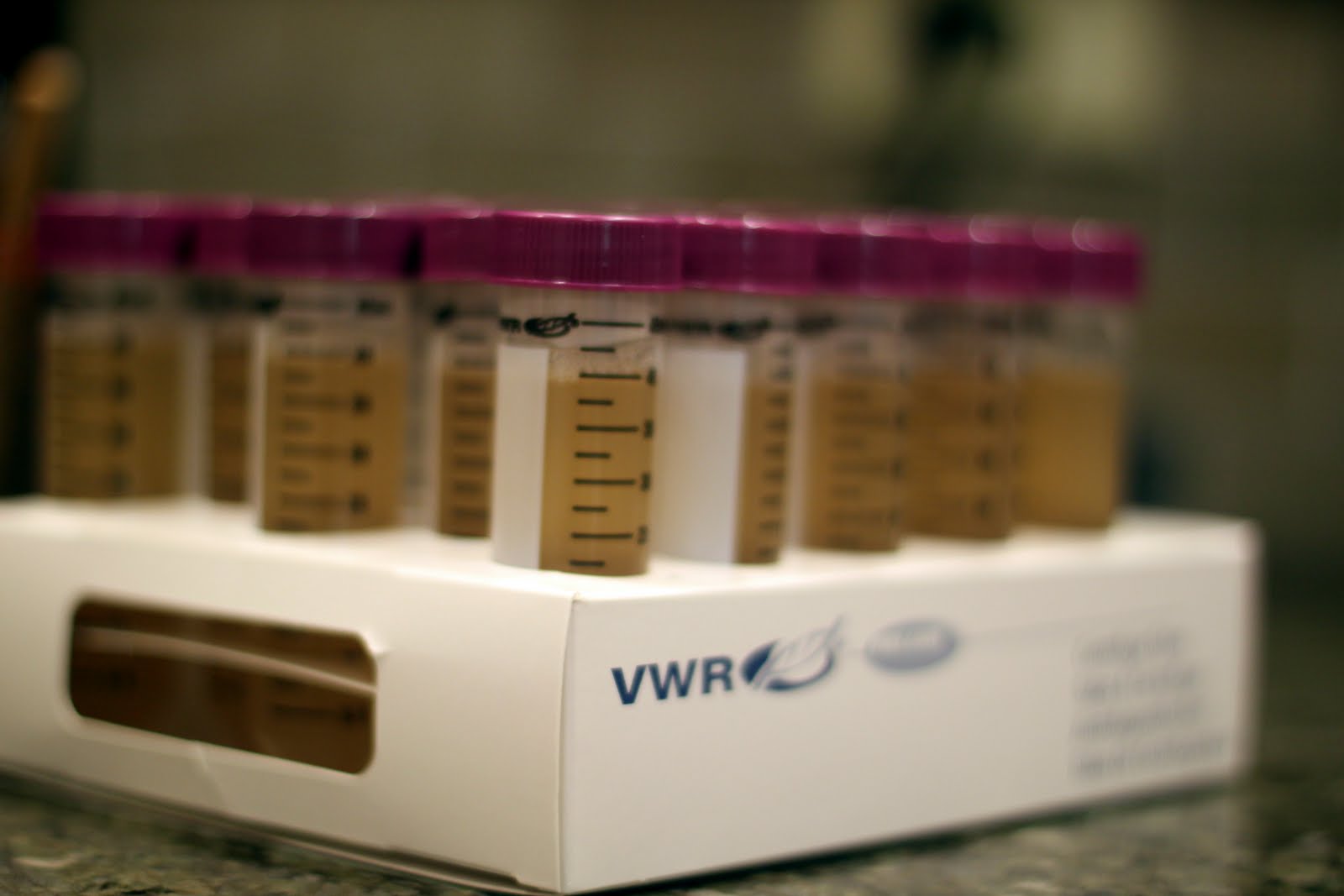
The yeast cultures from the Stonington, Connecticut vineyard hunting trip have all burst to life with some very interesting and encouraging results.

While I was sitting around waiting for things to happen inside those tubes, I found lots of practical and timely reading through Jamil's (just as much Chris White's) yeast book. Had me harkening back about 15 years to my Microbiology 101 class with all of this aseptic technique, plating agar media, incubators talk.

Now, I'm not going to venture off in to selective media, vitality or viability testing or anything too geeky, but rather rely on sensory evaluations and macroscopic techniques.

The first macroscopic observations actually came the evening of the collection, only about 10 or so hours after the cultures were started. I noticed turbidity and some positive pressure on one of the tubes with the Sauvignon Blanc grapes...a little agitation revealed some CO2 production. Interestingly, these are the first grapes to ripen and were harvested a few weeks prior to our visit. There were a few straggler tiny clusters missed by the harvesters, so I was able to snag a few for my effort.

Anyway, I guess I wasn't going to have to sit and stare at these for days on end before at least 1 tube with some growth. A sniff along the cap didn't yield much, so I re-tightened the lids and turned the tubes over on to their caps for the night. The centrifuge tube cone bottoms require a rack, and the cardboard rack would take too much of valuable counter space. I tucked the 11 tubes in to small corner of my cutting board, and went to bed for the night.

Agitated them all again in the AM before shooting out the door in a futile attempt to miss the Monday AM Boston traffic. Came home that evening to see 2 or 3 of them leaking fairly significant amounts of wort (beer?) from the screw threads, mabye as much as 1/3 of their total volume, due to the built up CO2 pressure. Well...duh.

Good news is that the headspace in the tubes was filled with CO2...bad news is that I probably lost lots of viable bacteria and yeast in those, most noticeably in that tube of Sauv. Blanc, which when agitated put forth even more frothy CO2 bubbling, and this time a vinous, white winey lactic and bread yeasty smell.

The open air tube had some strange brown coagulated proteins, which reminded me a lot of the first stages of culturing up the kombucha bugs. No CO2, though. Maybe the clumps are hot/cold break from the DME? All the tubes w/ the white grapes were showing signs of life, while the reds were pretty silent. Oddly, all the tubes with grapes were seemingly devoid of these brown coagulated clumps.

Three days after harvest, all the white grapes were still actively fermenting, and yeast seemed to be floc'ing in the bottom of the tubes in stratified layers. The reds were quickly following suit, just a bit behind the whites. No CO2 production evident from the open air vial, just the brown clumps. Are the brown clumps growing?...maybe a bit more turbid now? (should have take photos in same position/lighting for side by side comparison).

The next step was the following weekend (Day +7) when I took 1 tube of each of the four grape varietals, agitated to get the yeast/bacteria cakes in to suspension (had to shake pretty hard for some of the tubes) and pitched in to ~250ml of starter wort + pinch of nutrient. There was significant turbidity and CO2 production and some leaking at most of the tubes' cap threads.
The Sauv Blanc tube that was the most active from day 1 was very turbid at this point, and and took the blue ribbon yeast production, despite the reduced propagation media volume.
I sniffed each of the vials (too nervous to taste anything yet).
All but the merlot smelled like raw, yeasty fermenting wine. The merlot smelled like raw sewage on a hot summer's day. But just a small tube of it, so thankfully a minimal nostril full didn't leave me reeling, spilling the vile stink all over the kitchen. Guess I got a bloom of Enterobacter? Glad I didn't taste it. It got pitched in to its fair share of starter wort, hoping that the more benevolent creatures start to outcompete this stink stank stunk bacteria. The cultures were topped with foil and rubber bands (to minimize any stank spilling, should one get tipped in the high traffic kitchen) and were swirled to agitate whenever I walked by.
Fast forward one day, and little creamy white growths appeared on all of the cultures. Certainly didn't have the morphology of a mold bloom, most resembled what in my experience looks like yeast (mini) krausen.
The next day I took the 2nd runnings from a batch of belgian strong (gravity read at 1.034) and topped up the cultures with another 250ml of wort.
Fermentation was evident in the AM, with CO2 emerging through the media. These were left to ferment for 5 more days (Day +13) and sufficient yeast was settling at each of the cultures and continued to be very turbid. I've read that lots of wild yeasts can be very dusty, but its not really possible to know whether this was due to dusty yeast or otherwise high and varied bacterial blooms. I chilled the samples down in the fridge in an attempt to crash the yeast out of suspension, in order to repitch a hopefully concentrated yeast cell count in to more starter wort. Uncapping the foil revealed a very similar looking pellicle in each.
Again, certainly no mold, but the aroma profiles have begun to differentiate themselves.
  • Sauv Blanc smelled strongly of fruity kombucha (indicating some acetobacter produced acetic acid)
  • Chardonnay was a softer kombucha/acetic, more raw and yeasty
  • Cab Franc was notably vinous with a smaller, softer background odor of bready yeast
  • I took a very short sniff of the Merlot fearing the worst, but it seems that my hopes were realized...the Enteric poop stink has been mitigated significantly, and is now just a faint background odor. Perhaps just remnant volatile odor compounds from the now outcompeted bacterial population.
The cultures were decanted and added to ~225ml of wort, affixed with an airlock, and now currently sit at room temperature. I neglected to take any gravity readings.


Single tubes of each varietal + the open air tube remained, and signs of fermentation continue on the tubes with grapes. Its like the microbes are slowly gaining access to the sugars/nutrient in the grapes so are slowly chewing away. The color change in the red cultures is obvious. No obvious pellicle forming like in the foil covered larger cultures.
As for the open air tube, we finally have significant CO2 production, first noted at Day +11. You can see the foam leaked around the threads after agitation...smelled raw vinous, yeasty (sorry for the repetitive descriptors...I'll employ far more colorful vocabulary when I act like a man with actual hair on his chest and take a swig).
Stay tuned for the next exhilarating microbiological installment when I actually make something intended for at least a small taste analysis.

Plans call for making a small batch of a relatively lightly hopped farmhouse style beer, splitting the wort across 4 ~ 1 gallon fermenters and see what kind of primordial beers we end up with on their first generations. I'll grow up the additional 5 samples behind these first 4 to see if there are any significantly different characteristics, and selecting a few that smell the most benevolent. There are also plans for streak out the mixed cultures on some malt agar media, isolate some yeast from the bacteria, then slowly step up in 25, 50, 100, 250, 1000ml erlenmyers to grow up pure cultures to more split wort 1 gallon pitching volumes, but that'll be a story for a future post.
Tuesday, October 5, 2010

Yeast Hunting near Flanders*

I have been brewing batch after batch of beers with other people's bugs these days, in order to hurry and wait for them to be ready to bottle in 1-2 years. The notion of brewing an american wild ale with truly wild yeast and bacteria that has been nurtured along by my own doing from their primordial beginnings has been growing in romance in my mind for quite some time. I have been reading and re-reading about it. Talking to (at?) anyone who will listen to me go on and on about such things as 'facultative anaerobes'.

Usually starts with a self-indulgently lame lead-in like:
"So, you like sourdough bread, right...? Well, y'know...there are these beers..."

Knowing that some of my favorite beers are created with such wild caught strains, I had to have a hand at it. I know I'm not alone in this, and the chance at finding, creating and learning about beers with as yet undiscovered terroir signature has struck many others before me. Of course, this was (and in the rare case, still is) how beer was brewed for thousands of years, and is experiencing a tremendous revival as of late. Hopefully, I will be able to favor and coax along an otherwise happenstance and motley fungal and bacteria crew (no mold-whammies, no mold-whammies...aaaaaand, STOP!) with some relative simple steps and techniques.

The first step to growing up yeast is the familiar process of making an appropriate medium to capture and grow up the cultures. I started with boiling up a small starter (OG 1.030) with DME and a pinch of wyeast nutrient.
I added 40ml of still hot (~170F+) wort to eleven sterile 50ml centrifuge tubes and re-sealed the threaded caps. Threw them in a gallon ziplock bag the morning before driving down to Saltwater Farm vineyard for their 2010 Chardonnay harvest. Here's a video peek of the place from last year's Halloween Cab Franc harvest.
The mood was considerably more energetic at this year's harvest. Of course the vines are another year older, but the grapes were pushing the brix count north primarily from the long, warm and sunny season, and the tons/acre harvest (I hear) was exceptional. Lots of new french oak barrels (ooooooh boy) lay in waiting for the Chardonnay. I spent a few minutes, alone, in silence, just being near them, smiling widely.
Outside, the surrounding wetlands and fields were thick and lush. Plants that are usually winding down to dormancy this time of year, exhausted from the efforts of flowering and then setting seed, were flagrantly reblooming.
Lots of yeast-feeding nectar was still aplenty, so the yeast conditions were quite good, but not ideal. Both the night and day time temps have been cool, as of late (good), but the rains came through a few days (not so good). I could see that the whitish haze that typically has set up camp on the grapes has been washed off a bit, though still quite visible toward the bottoms of the clusters.

I had big Luc strapped to me, so my harvesting efforts were probably measured in the 10s of pounds, not hundreds, but Esther and Anne-Marie quickly filled the trays in the overcast ~55F weather.
I opened a few vials and pushed 4-6 of those bottom-of-the-cluster grapes in to each. I wandered around the grounds, snagging 4 different varietals: Sauvignon Blanc (3), Chardonnay (3), Cabernet Franc (2) and Merlot (2).
Not so much because I postulated that Id get different strains from the different grapes, but rather there might be micro climates hidden within the micro climates of the vineyard, each yielding some different microbiota. With the 11th vial, big Luc I went for another 20minute stroll through the vines, with the cap off...making our own mini-Lambic. For the record, I too don't really wish to enter in to a debate of the 'proper' use of the appellation...

Our good friends, the vineyard owners, were quite generous to heed my request for 5lbs of the Cabernet Franc, for use in adding to a portion of the strong pale sour beer I brewed not too long ago. When we returned home, Esther took the Luc-handoff, and I went to work destemming these pristine/mold free clusters by hand. In to a washed stainless bowl, then vacuum seal bags, then the freezer. 4lbs, 10oz. I had hoped for 5 on the button. Nuts.

I'll add the grapes after the Sacch/Brett has been knocked back a bit by the lowered pH levels, and give the now stronger pedio something fresh to call dibs on.

It is now already three days later, and I've seen clear signs of fermentation, first on the white grapes, then the red, but nothing too definitive yet in the 'open air' vial. I'll likely chill, then decant the grapes and wort tomorrow evening. A familiar whitish sediment is settling on the bottoms of the most active vials, and bright hints of vinous fermentation gases are sneaking from under the plastic screw tops.

The agar, sterile Petri dishes, inoculation loop, and small scale Erlenmyers are on their way. Meanwhile, I'm only about 1/2 way through Yeast, so I've got some work ahead of me.

And at least I have Luc to let me go on and on (for now, anyway) about my hopes of finding the elegant, yet rustic Tetreault strains, and dreaming about going yeast hunting in own family farmhouse brewery one day.


*Flanders (Road)

Sunday, March 28, 2010

stonington sour

Just returned from a (yet another) trip to the Netherlands. When it is at all possible, and I can convince my co-workers, I do my best to get in to Amsterdam to get some world class beers at Cafe Gollem, on Ramsteeg.

On my first few trips, I was thrilled to find the Westvleteren offerings, calmly residing on their thoroughly Belgian bottle list. However, over the last few years, I feel the growing pull of the wild fermented beers, and find my eyes returning back to the most visible chalkboard in the place, the one over the door, where all of the spontaneously fermented offerings are listed. My coworkers all wait patiently, and say 'So, what do you think...what are we drinking tonight?'

I put some Orval, Rodenbach Grand Cru in front of them.
gueuze, faro...
some funky imperial stout (de struisse cuvee delphine)

I let them go through the process, uninitiated.

they wince. they make faces. they raise their eyebrows. they sniff. cautiously... then, put the glass back to the table without trying it, doubtful about the experience in front of them. They'ver heard me say some seemingly un-beery things like 'horse blanket' 'sorta like bleu cheese'

They muster courage, and give it a go. 'wow'. and they keep sipping, keep drinking, until its time to ask...'what are we drinking next?' save the receipt boys, we're going to need it.

I wake up before the sun on the morning after my return, grab my brew kettle, and start heating up the strike water for my first (prospective) sour/wild ale. Taking cues from the flavor profiles of Temptation, Mo Betta Bretta, and my own notions of what I'd like to see in an American Wild, this beer was mashed in high (157F) to ensure lots of dextrins that the sacch will pass over, for the rest of the bugs to go after later. Replaced a pound of the pilsner with carapils for more dextrin.
A little Ca+Cl- to up the Calcium in the mash to ~100ppm.
Restrained hopping with 1oz of EKG ~15IBUs.

90 minute boil.

Pitched WLP 655 (Sour Mix I) and WLP 645 (Brett c.) directly (no starters) in to primary.

Now, I'm drinking an Oro de Calabaza (batch292) and making a 500ml 1.040 starter to add the dregs to kick some Dexter, MI bugs to the mix after a couple days. 1oz of medium toast French oak and 500ml of Chardonnay from Stonington, CT will complete the picture in the extended secondary (airlocked glass is intended).
Will keep the fermentation in the mid 60s to encourage a slower initial ferment, and then let the heat of the summer take the lactic acid levels up to where I hope they'll go.
stonington sour american wild ale

Type: All Grain

Date: 3/28/2010

Batch Size: 6.00 gal

Brewer: JC
Boil Size: 7.23 gal Asst Brewer:
Boil Time: 90 min Equipment: My Equipment
Taste Rating(out of 50): 35.0 Brewhouse Efficiency: 70.00
Taste Notes:

Ingredients

Amount Item Type % or IBU
7 lbs 12.0 oz Wheat Malt, Bel (2.0 SRM) Grain 49.21 %
6 lbs Pilsner (2 Row) Bel (2.0 SRM) Grain 38.10 %
1 lbs Cara-Pils/Dextrine (2.0 SRM) Grain 6.35 %
1 lbs Wheat, Flaked (1.6 SRM) Grain 6.35 %
1.00 oz Goldings, East Kent [5.00 %] (90 min) Hops 14.6 IBU
1.00 oz French Oak Cubes, Medium Toast Misc
1.00 tsp Yeast Nutrient Misc
8.00 gm Calcium Chloride Misc
500.00 ml Chardonnay (Saltwater Farms Vineyard, 2006)Misc
1 Pkgs Brettanomyces claussenii (White Labs #WLP645) Yeast-Ale
1 Pkgs Sour Mix 1 (White Labs #WLP655) Yeast-Ale

Beer Profile

Est Original Gravity: 1.067 SG

Measured Original Gravity: SG
Est Final Gravity: 1.019 SG Measured Final Gravity: SG
Estimated Alcohol by Vol: 6.26 % Actual Alcohol by Vol: %
Bitterness: 14.6 IBU Calories: 296 cal/pint
Est Color: 4.6 SRM Color:
Color

Mash Profile

Mash Name: Single Infusion, Full Body Total Grain Weight: 15.75 lb
Sparge Water: 2.23 gal Grain Temperature: 72.0 F
Sparge Temperature: 168.0 F TunTemperature: 72.0 F
Adjust Temp for Equipment: FALSE Mash PH: 5.4 PH

Single Infusion, Full Body
Step Time Name Description Step Temp
45 min Mash In Add 19.69 qt of water at 169.4 F 157.0 F
10 min Mash Out Add 7.88 qt of water at 199.5 F 168.0 F


4/9/10- 1oz medium toast French oak cubes put on 300ml Chardonnay, capped with saran wrap under cap to reduce oxidation.

4/24/10- 1oz medium toast French oak drained of wine + ~500ml of cultured up dregs of oro de calabaza, consecration and fantome printemps , added to stonington sour.

Related Posts with Thumbnails